


The famed economist John Maynard Keynes once quipped, "The market can remain irrational longer than you can stay solvent."
We've entered the third year of the artificial intelligence (AI) revolution, and I'm observing widespread investment exhaustion. People discuss AI as if it's yesterday's news, as though the surge has already passed.
I'd remind them: revolutionary megatrends span decades. The most challenging aspect of profiting from megatrends isn't the initial investment. It's persevering and maintaining interest.
My twist on Keynes: "Winners can keep on winning longer than you can stay curious."
- AI has ruled the markets since ChatGPT's November 2022 debut.
It morphed Nvidia Corp. (NVDA:NASDAQ) into the planet's biggest corporation and injected trillions into US equities.
It single-handedly resurrected nuclear power and made stodgy utilities Wall Street's hottest buys.
And it birthed the world's first half-trillion-dollar private firm: OpenAI.
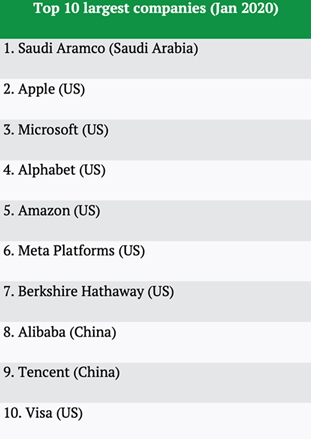
AI is unequivocally this decade's transformative megatrend. Need evidence? Observe what's shifted in a mere six years...
2020's top 10 global companies:
Versus today's top 10:
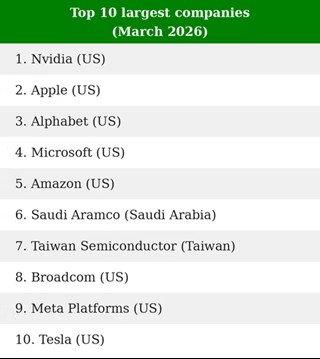
Berkshire Hathaway (BRK.B:NYSE), Alibaba Group Holding Limited (BABA:NYSE), Visa Inc. (V:NYSE), and Tencent have exited... replaced by Broadcom Inc. (AVGO:NASDAQ), Taiwan Semiconductor (TSM:NYSE), Tesla Inc. (TSLA:NASDAQ), and Nvidia.
The common thread? They're all riding the AI wave.
- AI isn't decelerating, but the choke points are migrating...
I realize AI feels slightly long in the tooth. No fund manager seems clever saying, "I'm bullish on AI."
But to rephrase a hedge fund buddy: "Do you want to sound smart, or do you want to make money?"
My analysis indicates we're still early in the AI buildup. However, here's the rub: The bottlenecks are shifting. And the stocks to own are evolving right along with them.
Initially, it was GPUs—the chips crunching billions of calculations per second so ChatGPT can answer you. Every data center needed truckloads of Nvidia silicon.
More computing power meant smarter AI. ChatGPT ignited a global chain reaction of computing spending, crowning Nvidia as the world's most valuable firm.
Yet the dash for Nvidia chips revealed a new bottleneck: linking all those GPUs. What's the point of a billion-dollar chip stash if they can't communicate? Networking stocks became the next bonanza.
Then came power. Data center operators grasped that procuring GPUs and wiring them in huge racks was the easy part. Energizing those power-hungry AI racks posed the real challenge. Nuclear energy—once left for dead—came roaring back.
Next, spending pivoted to memory. Training superior AI demands feeding it more data, faster. Memory chips—the devices that "feed" GPUs data—emerged as the latest bottleneck.
High-bandwidth memory, shuffling data 10X quicker than standard memory, exploded in demand. Memory prices tripled within months. The commodity everyone took for granted became tech's scarcest resource.
- Every time one bottleneck clears, a new one appears...
As investors, profits lie in spotting where the goalposts are moving before the herd piles in.
Right now, AI spending is descending the stack again. The companies to watch aren't household names. They're the picks-and-shovels players—those erecting the infrastructure that makes it all work.
Today, that shift points squarely at semi-cap companies: the ones manufacturing the machines that make AI chips.
As chip demand skyrockets, the real constraint isn't the chips... it's the capacity to mass-produce them.
That's where the next wave of capital is flowing.
The boom isn't over. It's just shifting.
| If you enjoyed this, make sure to sign up for the Jolt, Stephen McBride's twice-weekly investing letter-where innovation meets investing. | Go here to join |
Important Disclosures:
- As of the date of this article, officers, contractors, shareholders, and/or employees of Streetwise Reports LLC (including members of their household) own securities of Tesla Inc. and Apple Inc.
- Stephen McBride: I, or members of my immediate household or family, own securities of: None. My company has a financial relationship with: None. My company has purchased stocks mentioned in this article for my management clients: None. I determined which companies would be included in this article based on my research and understanding of the sector.
- Statements and opinions expressed are the opinions of the author and not of Streetwise Reports, Street Smart, or their officers. The author is wholly responsible for the accuracy of the statements. Streetwise Reports was not paid by the author to publish or syndicate this article. Streetwise Reports requires contributing authors to disclose any shareholdings in, or economic relationships with, companies that they write about. Any disclosures from the author can be found below. Streetwise Reports relies upon the authors to accurately provide this information and Streetwise Reports has no means of verifying its accuracy.
- This article does not constitute investment advice and is not a solicitation for any investment. Streetwise Reports does not render general or specific investment advice and the information on Streetwise Reports should not be considered a recommendation to buy or sell any security. Each reader is encouraged to consult with his or her personal financial adviser and perform their own comprehensive investment research. By opening this page, each reader accepts and agrees to Streetwise Reports' terms of use and full legal disclaimer. Streetwise Reports does not endorse or recommend the business, products, services or securities of any company.
For additional disclosures, please click here.