

Tensions escalated this week as Iran's Revolutionary Guards declared on Tuesday that no oil would leave the Middle East until the cessation of U.S. and Israeli assaults, Parisa Hafezi and Alexander Cornwell reported for Reuters on March 9.
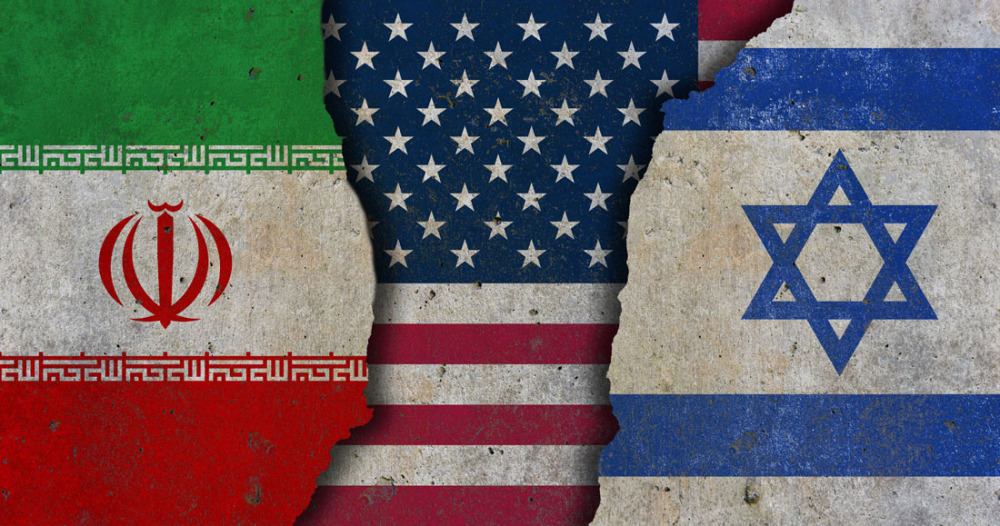 This bold statement prompted a stern response from U.S. President Donald Trump, who threatened to retaliate against Iran "20 times harder" should it impede oil exports. Amidst this exchange of threats, investors speculated heavily on Tuesday that Trump might soon conclude the hostilities to avert a catastrophic disruption to global energy supplies.
Despite the hopeful financial markets, which saw a recovery in Asian and European stock prices following a sharp decline, the situation on the ground in Tehran remained dire. According to local reports gathered by Reuters, the capital experienced its most severe bombardment overnight since the conflict began.
"It was like hell. They were bombing everywhere, every part of Tehran," shared a Tehran resident over the phone, preferring anonymity due to safety concerns, according to the Reuters account. "My children are afraid to sleep now. We have nowhere to go."
In a recent press conference, Trump addressed the ongoing conflict, which has significantly disrupted global oil shipments and could send oil prices to new highs. Despite Iran's refusal to comply with Trump's earlier demands to allow the U.S. to select its new leadership — instead appointing hardliner Mojtaba Khamenei as supreme leader — Trump's remarks seemed to calm markets. He reassured that the U.S. would conclude the conflict before it could trigger an economic crisis reminiscent of the 1970s oil shocks, Reuters reported. Trump noted that the U.S. had inflicted substantial damage and anticipated the war would end sooner than the initially projected four weeks. Notably, he refrained from insisting on Iran's "unconditional surrender" or the U.S.'s right to choose its leader, a departure from his previous stance.
Hafezi and Cornwell said the war has led to a standstill in oil and liquefied natural gas shipments through the Strait of Hormuz, a critical passage for a fifth of the world's supply, located along Iran's coast. This disruption has forced producers to cease operations due to full storage capacities. Recent incidents, including a reported attack involving a loud bang and a splash near a bulk carrier in the Gulf, have heightened tensions and risks in the region.
Despite a spike in oil prices to nearly US$120 a barrel following the appointment of Iran's new leader, prices settled back to around US$92 by 11:00 GMT on Tuesday, indicating market expectations for an imminent resolution.
Turbulence in the Markets
It didn't take long for global markets to experience turbulence following the military strikes by the U.S. and Israel against Iran that started on February 28, according to a piece by Morgan Stanley on March 3.
In response to these actions, global equities saw a downturn while commodities like gold and oil experienced price increases. Iran's counterstrikes against U.S. and Israeli bases across the Middle East further exacerbated investor uncertainty.
Historically, the Strait of Hormuz has experienced temporary disruptions during regional conflicts but has never closed entirely, the report noted.
"Any disruption to transport through the Strait can have substantial impacts to global energy markets and prices," said Devin McDermott, Morgan Stanley's Head of North American Energy Research. "While history is a helpful guide in how this might ultimately play out, there is still a lot of uncertainty around how the regional conflict will progress over the coming days and weeks."
The ongoing tensions in the Strait of Hormuz hold significant implications for the global oil markets. This critical waterway facilitates the passage of about 20% of the world's oil trade, 20% of global LNG, and 5 million barrels per day of refined products. Although there are alternative routes, they lack the capacity to handle comparable volumes.
A prolonged disruption would not only affect global markets but also Iran’s economy, the report said. Iran, which produces about 3.3 million barrels per day of crude oil and exports approximately 1.6 million barrels per day primarily to China, depends on the Strait for its oil exports. The presence of U.S. military forces in the region, including naval assets tasked with ensuring the safety of maritime transit, plays a crucial role in maintaining the flow of these exports.
US$200 Oil?
On Tuesday, U.S. crude oil prices stabilized around US$90 per barrel, while investors digested Trump's remarks, reported Lee Ying Shan for CNBC on March 10. Brent crude experienced a decrease, falling 5.72% to US$93.30 per barrel as of 8:13 a.m. ET, with U.S. crude also dropping 4.75% to US$90.27 per barrel. This downturn follows a surge past US$100 on Monday.
Amid these fluctuations, Amin Nasser, chief executive officer of Saudi oil giant Aramco, expressed grave concerns during an earnings call about the war's potential "catastrophic consequences" for the global oil market. Nasser described the situation as triggering "a severe chain reaction" and "a drastic domino effect" that extends beyond shipping to impact various sectors including aviation, agriculture, automotive, and others. He emphasized the severity of the ongoing disruption, stating, "The longer the disruption goes on and the more drastic the consequences for the global economy," and labeled it "by far the biggest crisis" the region's oil and gas industry has ever faced.
According to a March 3 report by Morgan Stanley, the duration of the conflict will be a critical factor. A prolonged conflict could exacerbate economic pressures through elevated oil prices, increased inflation, and unstable financial conditions.
Monica Guerra, Head of US Policy at Morgan Stanley Wealth Management, expressed concern about the market's ability to handle extended uncertainty, noting that short-term uncertainty might be manageable, but prolonged instability could be challenging to overlook.
Investors are advised to consider these dynamics as they navigate the market implications of the ongoing conflict and broader geopolitical risks. Looking ahead, themes such as defense, security, aerospace, and industrial resilience might present opportunities for increased investment exposure, driven by government spending and multiyear demand, Morgan Stanely said.
Oil and gas prices initially surged due to restrictions in the strait, reported Alison Durkee for Forbes on March 5. But Tik Root wrote for Mother Jones on March 10, "ExxonMobil, for example, is down slightly and Chevron has been hovering around its pre-war price. Those more tepid responses could be due to a range of factors, such as geopolitical uncertainty or increased refining costs that come with high prices, but even those companies are probably selling their product for more than they were last week."
"All the fundamentals and technicals have taken a back seat to the macro headlines," Orion Capital Founder Michael Khorassani said. "The markets are in turmoil over oil, having gone from US$60 to US$85. I think there is a VERY real possibility that oil goes to US$200.”
Such an increase would generally benefit U.S. oil companies, with shares of major firms like Exxon and Chevron Corp. experiencing a rise following the weekend's military strikes. If that trend continues, Durkee reported that according to Insider, smaller-cap oil companies, such as Talos Energy, are also poised to gain from the heightened prices and continuing conflict.
Exxon Mobil Corp.
Exxon Mobil Corp. (XOM:NYSE) finds itself in a particularly advantageous position amidst current market conditions, according to a report by Aditya Raghunath for The Street on March 9.
 Streetwise Ownership Overview*
The company boasts a vast global trading operation and possesses one of the largest long-term charter fleets in the industry. Senior Vice President Jack Williams explained that ExxonMobil has the capability to redistribute feed and products globally to "optimize around this situation." In simpler terms, ExxonMobil is better equipped than many of its competitors to handle supply disruptions, the report said.
A key aspect of ExxonMobil's strategy is its significant production focus in the U.S. Permian Basin and Guyana, which strategically reduces operational risks associated with the ongoing conflict. This positioning allows the company to benefit from elevated global oil prices while minimizing the direct impacts of regional instabilities.
"ExxonMobil has raised its dividend every year for 43 consecutive years, making it one of the longest streaks in the S&P 500," Raghunath wrote. "With roughly US$17 billion in projected annual dividend payments and 13% earnings growth targeted through 2030, management has made clear the dividend is not going anywhere. Analysts forecast XOM stock to improve its free cash flow from US$23.6 billion in 2025 to US$41 billion in 2029, which should translate to consistent dividend hikes.
On Tuesday, Exxon Mobil announced its intention to shift its corporate registration from New Jersey to Texas, where its headquarters are currently based, according to a report by Sheila Dang and Ross Kerber for Reuters on March 10.
This strategic move, revealed in a recent proxy filing, is aimed at strengthening the company's position against activist shareholders and climate change advocates. If shareholders approve this proposal, Exxon Mobil will join a list of prominent companies such as SpaceX, Tesla, and Coinbase that have chosen to register in Texas, known for its business-friendly environment.
Jill Fisch, a law professor at the University of Pennsylvania, explained that having a company incorporated in the same state as its headquarters can be strategically advantageous, the report noted. This proximity can facilitate easier access to state politicians, who may be instrumental in addressing tax issues or other policy matters. "One way you might show your loyalty and get the legislators to pay attention to you is to incorporate in your home state,” Fisch noted.
Exxon, which has historical ties to New Jersey dating back to its origins following the breakup of Standard Oil in the early 1900s, has had its headquarters in Texas since 1989. This move to align its place of incorporation with its operational base in Texas could further solidify its relationships with local policymakers.
According to a February 3 updated research note by Analyst Sergey Pigarev for Freedom Broker, the company's recent financial performance, while falling short of last year's figures, managed to exceed market expectations slightly.
The company, which is the largest oil and gas entity in the U.S., achieved operational milestones thanks to production increases in Guyana and the U.S. Permian Basin. Despite these operational successes, a significant drop in oil prices contributed to an eight-fold year-over-year rise in adjusted earnings for the Energy Products segment, reaching US$2.9 billion. However, this was not enough to prevent a decline in consolidated adjusted net earnings, marking the third consecutive year of such downturns. Looking ahead to 2026, the expectation is that these challenging trends will continue.
Written before the beginning of the war, the note reflected the glum outlook on the sector at the time. "In our view, the company’s shares are trading above fair value," Pigarev wrote. "We reiterate our target price of US$123 per share and maintain our Sell recommendation."
According to the site Stock Analysis, the average rating for the stock among 20 analysts was still "Buy," with a price target of US$139.20 per share.
An AI analysis of the company's charts by StockInvest.us noted, "Exxon holds several negative signals and this should be a sell candidate, but due to the general chance for a turnaround situation it should be considered as a hold candidate (hold or accumulate) in this position whilst awaiting further development."
1Exxon Mobil has a market cap of US$626.85 billion and a 52-week range of US$97.80 to US$159.61. It has 4.1 billion shares outstanding. Less than 1% of the company is owned by insiders and management and holding companies, and about 66% by institutions.
Top shareholders include The Vanguard Group Inc. with 10.27%, BlackRock Institutional Trust Co. with 5.34%, State Street Investment Management with 4.92%, Fidelity Management & Research Co. with 2.63%, and Geode Capital Management LLC with 2.3%.
Chevron Corp.
According to Natasha Kaneva, JPMorgan’s head of global commodities research, "The market is shifting from pricing pure geopolitical risk to grappling with tangible operational disruption."
And for Chevron Corp. (CVX:NYSE), these developments are proving to be a pivotal moment, wrote Raghunath for The Street on March 8.
One of the world's largest oil companies, the ongoing U.S.-Iran conflict has already pushed Chevron's stock price up by 21% in 2026 the report said.
Chevron's financial structure is robust, with a dividend and capital expenditure breakeven point below US$50 per barrel of Brent, ensuring the company can sustain its dividend payouts even if oil prices were to drop significantly from current levels. Based in San Ramon, California, and with 147 years of operational history, Chevron is well-versed in navigating market cycles, Raghunath said. The company boasts a strong balance sheet and substantial debt capacity, which has allowed it to consistently raise dividends even during economic downturns. In fact, Chevron has increased its dividend annually for 39 consecutive years.
Just before this historic surge in oil prices, Chevron announced its fourth-quarter earnings for 2025 and declared a 4% increase in its quarterly dividend, according to the report. Chevron CFO Eimear Bonner emphasized this decision, stating it aligns with the company's "top financial priority" of growing the dividend, underscoring Chevron's commitment to providing value to its shareholders even in fluctuating market conditions.
In the fourth quarter of 2025, Chevron reported a significant drop in its adjusted earnings per share (EPS), which fell by one-third year-on-year to US$1.52, according to a February 2 updated research note by Pigarev for Freedom Broker. Over the entire year, the adjusted EPS saw a decrease of 27.5%.
Despite this downturn, the company experienced strong growth in hydrocarbon production, primarily due to its acquisition of upstream producer Hess in mid-July 2025. However, even with the inclusion of Hess's production for the full fourth quarter, Chevron's production volumes saw a slight decline of 1% quarter-on-quarter.
Written before the war started, the note said at the time, "From our analysis, the stock appears to be trading above its fundamental value. Consequently, we maintain our target price of US$165 per share and continue to recommend a 'Sell' for Chevron’s stock," he wrote.
On Monday, Chevron's stock price experienced a slight decline of -0.269%, closing the day at US$189.43, down from US$189.94, an AI analysis of the company's charts by StockInvest.us said on March 10. Throughout the trading session, the stock showed volatility, oscillating between a low of US$188.12 and a high of US$191.69, marking a 1.90% fluctuation. Over the past two weeks, Chevron's stock has seen a modest upward trend, gaining 2.4%.
Trading volume on the last day increased by 2 million shares, despite the drop in stock price, which could potentially signal caution. This increase in volume on a day when prices fell might suggest an early warning and could slightly elevate the risk associated with the stock in the upcoming days. Overall, 14 million shares changed hands during the session, amounting to a total value of approximately US$2.63 billion.
"Several short-term signals, along with a general good trend, are positive and we conclude that the current level may hold a buying opportunity as there is a fair chance for Chevron stock to perform well in the short-term," the analysis noted.
According to Benzinga on March 10, Chevron has recently been reviewed by market experts from B of A Securities and Citigroup, both maintaining a Buy rating on the stock. The consensus target price stands at US$208.0, with individual targets of US$206 by B of A Securities and US$210 by Citigroup.
1Less than 1% of Chevron is held by insiders and management, about 7% by holding companies, and 68% by institutions. The rest is retail.
Top shareholders include The Vanguard Group Inc. with 9.13%, State Street Investment Management with 7.63%, Berkshire Hathaway Inc. with 6.52%, BlackRock Institutional Trust Co. with 4.78%, and Geode Capital Management LLC with 2.19%.
Its market cap is US$378.01 billion with nearly 2 billion shares outstanding. It trades in a 52-week range of US$132.04 and US$192.41.
Talos Energy Inc.
One smaller-cap company that could get a bump from the war is Talos Energy Inc. (TALO:NYSE), which recently disclosed its financial results for the fourth quarter and the entire year of 2025, revealing a challenging fiscal period, noted Simply Wall St on March 9. The company reported lower revenues of US$392.24 million for the quarter and US$1.78 billion for the year. It also recorded significant losses, with a net loss of US$202.58 million for the quarter and US$494.29 million for the year, compounded by a US$170.39 million impairment on oil and natural gas properties. The average production for 2025 stood at 94.6 MBoe/d.
Looking ahead, Talos has set its 2026 production guidance to lower volumes compared to 2025, indicating a cautious outlook. Despite these financial strains, the company completed a substantial buyback program, repurchasing 20,025,798 shares for US$211.56 million. This move highlights a complex scenario of managing weaker financial performance while still prioritizing shareholder returns, Simply Wall St said.
Investing in Talos Energy now means backing a Gulf of Mexico-focused producer that is grappling with unprofitability and fresh impairment charges, amidst hopes that disciplined capital allocation and asset quality will eventually lead to improved cash flows, the report noted. The newly issued guidance for reduced production in 2026 and the significant impairment charge are likely to impact the short-term outlook, introducing heightened execution risk and potential earnings volatility.
A rise in oil prices could improve the outlook of analysts on the company, who before the war had anticipated an approximate 8% annual decline in revenue to about US$1.5 billion for the company and no profitability, potentially deepening the pessimistic narrative surrounding Gulf of Mexico risks, the site said.
Talos, along with its joint venture partners, has designated Harbour Energy Plc as the new operator for their Zama oil project located offshore Mexico, according to Leo Mariani, managing director and senior research analyst at ROTH Capital Partners.
In a research note dated December 31, 2025, Mariani expressed optimism about this development, stating, "We think this will be a positive for the project as [Harbour] may finally get it moving after many years of indecision."
At the time Mariani released his analysis, Talos Energy's stock was trading at approximately US$11.20 per share, surpassing ROTH's target price of US$11 per share. Mariani elaborated on the valuation, noting, "Our US$11 price target on TALO shares is based on a 3x multiple of our 2026 debt-adjusted cash flow estimate, which is based on US$58 West Texas Intermediate oil and US$3.35 Henry Hub gas."
He continued to recommend Talos as a Buy.
Regarding the Zama project, all partners, including Pemex, Grupo Carso, and Talos (holding a 3.5% stake), have consented to Harbour's leadership. Harbour's immediate plan for Zama involves completing the engineering and design work by 2026.
Mariani also highlighted Talos Energy's strategic initiatives beyond traditional oil production, noting its pioneering efforts in the carbon capture and sequestration sector along the U.S. Gulf Coast, positioning the company as an innovator in this emerging field.
An AI analysis of the stock by StockInvest.us said, "Several short-term signals, along with a general good trend, are positive and we conclude that the current level may hold a buying opportunity as there is a fair chance for Talos Energy Inc. stock to perform well in the short-term."
1About 1.5% of the company is owned by insiders and management, and about 74% by institutions. The rest is held by strategic entities.
Top shareholders include Control Empresarial de Capitales with 25.84%, BlackRock Institutional Trust with 10.59%, Sourcerock Group LLC with 6.27%, The Vanguard Gorup Inc. with 5.6%, and Dimensional Fund Advisors LP with 5.32%.
Its market cap is US$2.23 billion with 169 million shares outstanding. It trades in a 52-week range of US$6.23 and US$13.85.
| Do you want the latest investment ideas delivered to your inbox? Sign up to receive the FREE Streetwise Reports' newsletter. | Subscribe |
Important Disclosures:
- Steve Sobek wrote this article for Streetwise Reports LLC and provides services to Streetwise Reports as an employee.
- This article does not constitute investment advice and is not a solicitation for any investment. Streetwise Reports does not render general or specific investment advice and the information on Streetwise Reports should not be considered a recommendation to buy or sell any security. Each reader is encouraged to consult with his or her personal financial adviser and perform their own comprehensive investment research. By opening this page, each reader accepts and agrees to Streetwise Reports' terms of use and full legal disclaimer. Streetwise Reports does not endorse or recommend the business, products, services or securities of any company.
For additional disclosures, please click here.
1. Ownership and Share Structure Information
The information listed above was updated on the date this article was published and was compiled from information from the company and various other data providers.