

Atlas Lithium Corp. (ATLX:NASDAQ) announced on August 25 that its 30%-owned subsidiary, Atlas Critical Minerals Corp. (JUPGF:OTCQB), has published technical reports confirming high-grade mineralization at two of its Brazilian projects. The results were reported in accordance with Regulation S-K 1300 of the U.S. Securities and Exchange Commission and prepared by SGS Canada Inc., an independent mineral evaluation firm.
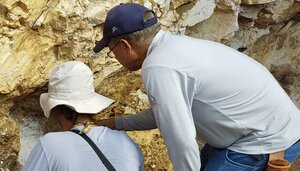
The Alto do Paranaíba Project in Minas Gerais State delivered rare earth oxide (TREO) grades as high as 28,870 parts per million (ppm), with titanium dioxide (TiO₂) content reaching 23.2%. According to the surface sampling program, 608 samples exceeded 1,000 ppm TREO and 205 samples surpassed 10% TiO₂. Drill results included intercepts such as 12 meters at 5,961 ppm TREO and 13.3% TiO₂.
In parallel, the Malacacheta Graphite Project, also in Minas Gerais, produced large-flake graphite with concentrate grades up to 96.6% graphitic carbon. Surface samples contained up to 15.4% graphitic carbon, according to initial metallurgical testing.
Marc Fogassa, Chairman and CEO of Atlas Lithium, stated in the announcement, "Atlas Critical Minerals' remarkable initial results corroborate the strategic value of our diversification approach."
Atlas Critical Minerals controls over 218,000 hectares of mineral rights across multiple Brazilian states, covering rare earths, titanium, graphite, uranium, copper, and nickel.
Permitting, Policy, and Price Volatility Define Lithium Landscape
On August 10, Reuters reported that CATL, one of China's largest battery producers, had suspended operations at its Yichun lithium mine in Jiangxi province due to an expired license. The facility represented about 3% of global lithium carbonate equivalent output. CATL said it was applying for renewal and planned to resume operations once approved. The shutdown triggered a sharp increase in lithium carbonate futures and share prices of lithium producers across China and Australia.
Benchmark Mineral Intelligence published a special report on August 14 confirming the Yichun suspension and characterizing its impact as sentiment-driven. Daisy Jennings-Gray, head of prices at Benchmark, stated, "EXW China lithium carbonate prices are already heading as high as 80,000–87,000 RMB/tonne (US$11.1–12.1/kg), after operations at CATL's Jianxiawo mine have been suspended." The report also referenced the temporary closure of Albemarle's La Negra plant in Chile following an acid tank incident. While only one of three production lines was affected, the event further fueled supply concerns.
Benchmark clarified that although the lithium market was not expected to enter a structural deficit, speculative activity had driven prices up. The firm reported that despite China's large stockpile—estimated at 130,000 tonnes lithium carbonate equivalent, disruptions at major projects were capable of sparking notable price increases. Benchmark concluded, "Politics, not just prices, will drive the timing of further supply decisions."
According to Kristie Batten's August 21 article for Mining, lithium production in the United States remained limited, with Albemarle's Silver Peak site in Nevada standing as the only operational lithium mine. The country continued to import around 90% of its lithium needs, mostly in processed form from South Korea and Japan using material refined in China, based on comments from Alice Yu, principal analyst for future energy metals research at S&P Global Commodity Insights. She noted, "Some players are looking at investing in US-based production capacity for precursors, cathodes and batteries, but some of those investments are currently parked because of concerns around downgrades to [the] US EV outlook."
Yu stated that despite weak lithium pricing slowing mine development, the U.S. Department of Energy had announced intentions to provide nearly US$1 billion in funding for critical minerals projects, including up to US$500 million for processing, manufacturing, and recycling. An additional US$50 million was earmarked for technologies such as direct lithium extraction.
The same article highlighted geopolitical shifts driving U.S. policy, with Yu explaining, "Defence and security-led priorities are now what's driving US critical minerals policies." She also reported that although U.S. EV demand had slowed, exploration investment had accelerated, with 2024 exploration spending ranking third globally. "We know that exploration takes place years and decades before production," she added, pointing to a potential long-term increase in domestic resource development.
Analysts Endorse Atlas Lithium's Path to Production with Strong Price Targets
According to a July 14 research note from H.C. Wainwright & Co., analyst Heiko Ihle maintained a Buy rating on Atlas Lithium Corporation and continued to list the company as one of the firm's "Top Picks for 2025." Ihle set a price target of US$18 per share, noting a potential 349% return from the US$4.01 price at the time of the report. He wrote that "with Atlas' low-cost operations nearing first production, we believe that the company is well-positioned to generate strong long-term returns and provide valuable geopolitical diversification."
Ihle highlighted the company's low operating cost of US$489 per ton of lithium concentrate, as well as its strategic offtake and investment agreements totaling US$80 million from major industry players. He stated that these arrangements support Atlas's 150,000 tons per annum Phase 1 production and potential 300,000 tons Phase 2 expansion. Ihle also pointed to the creation of Atlas Critical Minerals as a long-term strategic complement to its lithium operations, writing, "This project complements the firm's Neves project, as we expect the near-term cash flow to support Atlas' long-term strategy of becoming a leading player in global energy transition."
On August 5, Alliance Global Partners analyst Jake Sekelsky also reiterated a Buy rating on Atlas Lithium following the release of the company's definitive feasibility study (DFS) for the Neves project. Although the firm adjusted its lithium pricing forecast, it maintained a target price of US$20 per share, implying a 254% return from the US$5.65 share price at the time. Sekelsky called the DFS "an inflection point on the road to lithium production," emphasizing the project's low capital expenditure requirement of US$58 million and strong economics.
He reported that the DFS showed a net present value of approximately US$540 million and an internal rate of return of 145% using an SC5.5 price of US$1,700 per ton. At a more conservative price of US$1,200 per ton, the net present value was still US$260 million, more than double Atlas's enterprise value at the time of the report. Sekelsky noted that Atlas had already invested US$30 million into development, with an existing US$40 million prepayment facility expected to cover much of the remaining capex.
Sekelsky concluded that "the limited capex remaining coupled with Neves' status as a shovel-ready project place Atlas in pole position to become the next lithium producer in Brazil's lithium valley." He added that the modular design of the processing facility provided optionality for future expansion and that further funding opportunities were likely given the strength of the DFS.
Strategic Expansion Beyond Lithium Strengthens Project Portfolio
Ongoing project advancement at Atlas Critical Minerals provides a diversification layer to Atlas Lithium's broader portfolio beyond its core lithium focus. The company's Alto do Paranaíba and Malacacheta projects are positioned in a region known for geological richness and favorable mining infrastructure, offering logistical advantages for exploration and development.
The technical results filed with the SEC represent early progress in evaluating the rare earth and graphite potential of the company's holdings, and the scale of mineral rights under ACM's control suggests further optionality across additional critical minerals. Brazil's stability, large reserves, and strategic location contribute to the competitive positioning of these projects within the global supply chain.
Atlas Lithium's August 2025 corporate overview also notes that its Neves Lithium Project has received all necessary permits and has a definitive feasibility study in place, with average annual production projected at 146,000 tons of spodumene concentrate at a cost of US$489 per ton. While lithium remains the company's primary focus, the reported results from ACM offer additional visibility into its broader critical minerals footprint.
 Streetwise Ownership Overview*
Ownership and Share Structure
According to Atlas Lithium, its management and insiders own about 27% of the company's shares. Strategic partners, including Mitsui & Co., hold another roughly 11%. Institutional investors own about 10%. The rest, about 52%, is in retail.
Refinitiv reports that Atlas has 19.58M outstanding shares and 11.43M free float traded shares. Its market cap is US$117.3M. Its 52-week range is US$3.54–12.48 per share.
| Want to be the first to know about interesting Cobalt / Lithium / Manganese investment ideas? Sign up to receive the FREE Streetwise Reports' newsletter. | Subscribe |
Important Disclosures:
- Atlas Lithium is a billboard sponsor of Streetwise Reports and pays SWR a monthly sponsorship fee between US$4,000 and US$5,000.
- As of the date of this article, officers and/or employees of Streetwise Reports LLC (including members of their household) own securities of Atlas Lithium
- James Guttman wrote this article for Streetwise Reports LLC and provides services to Streetwise Reports as an employee.
- This article does not constitute investment advice and is not a solicitation for any investment. Streetwise Reports does not render general or specific investment advice and the information on Streetwise Reports should not be considered a recommendation to buy or sell any security. Each reader is encouraged to consult with his or her personal financial adviser and perform their own comprehensive investment research. By opening this page, each reader accepts and agrees to Streetwise Reports' terms of use and full legal disclaimer. Streetwise Reports does not endorse or recommend the business, products, services or securities of any company.
For additional disclosures, please click here.